
Issue 13: Ornament
Harahara Tokei
Prologue
Summer, 2025.
Seomyeon Station, Busan, Republic of Korea.
A sudden business trip brought me here by chance.
On the first day, I could hardly move my feet to explore,
but the underground mall pulled me in at once—
a déjà vu dream of plastic, pink, stars, hearts, ribbons.
Every corner overflowing with cuteness.
As an Asian who has lived many years in the United States,
I found myself drawn to it irresistibly,
even when I couldn’t explain why.
Alone in a foreign city,
with no one I knew,
I wandered for hours.
At one maid café, I learned to write my name
on a tiny card
and draw a big heart beside it.
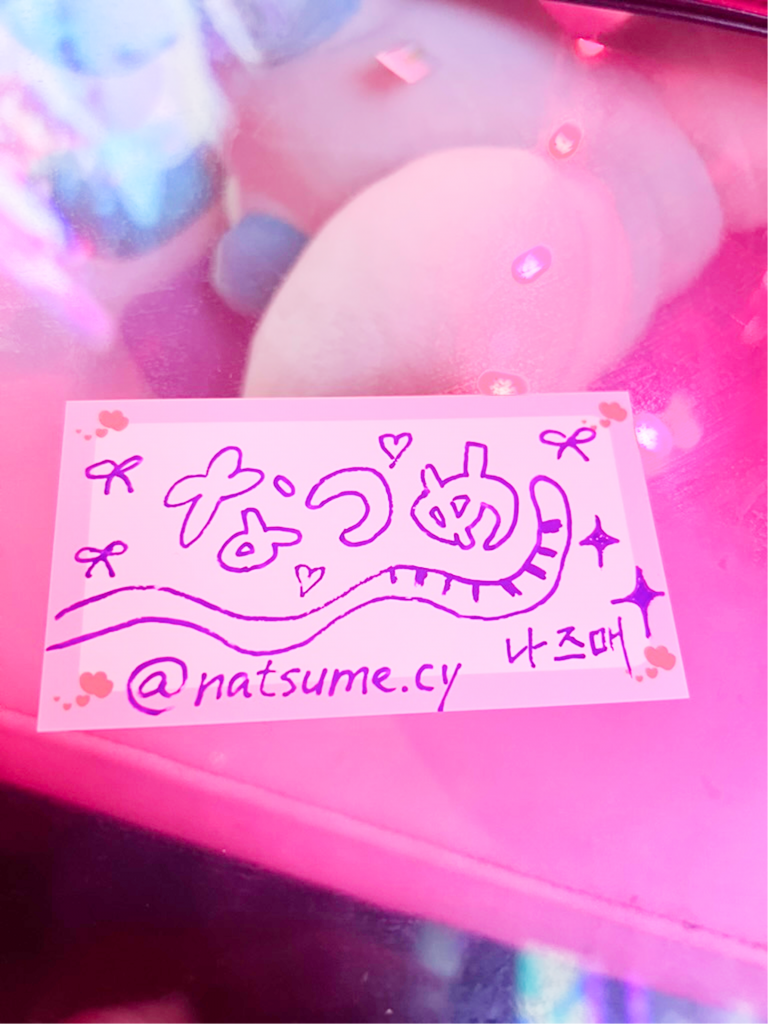
All these soft things wrapped around me,
and I fell into a dream.
After leaving Busan,
the feeling stayed for more than two months.
I bought cute clothes, trinkets,
and covered my laptop with stickers.
Each morning I dressed carefully,
and the moment I clipped something lovely onto myself,
my spirit felt redeemed.
It wasn’t exactly the same,
but I began to understand
the quiet happiness of those
who decorate every corner of their lives
with the things—or people—they love.
On Harahara Tokei
While tracing the tiny orders
within digital seams,
a word from 1970s Japan
kept returning to me—
Harahara Tokei.
It feels like an echo,
reverberating across decades,
mirroring what I now see.
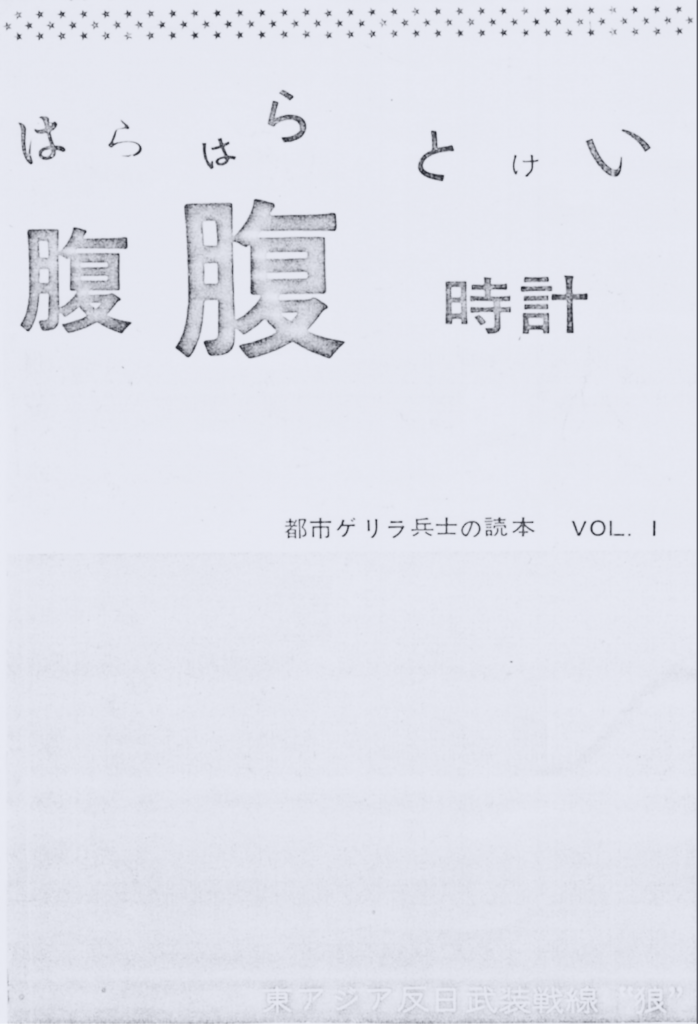
The original Harahara Tokei
was a zine from the 1970s,
compiled by the radical group
The East Asia Anti-Japan Armed Front.
Its context was explosive,
a history of despair,
of hard resistance.
But the act of
“measuring time through anxiety”
still rings true today—
only now it belongs
to those customizing WeChat
in their ita-like way.
What once turned outward
in tragic destruction
has folded inward,
becoming a quiet,
everyday anxiety,
constant yet invisible.
I borrow this word,
its tension and pulse,
to count
the gentle,
silent tuning
of our time.
Customized V
During that period when I was “enslaved” by soft, healing things,
the algorithm quietly led me to a hidden world—
one called Pain WeChat,
or more widely known as Customized V.
It was not mere beautification,
but the act of injecting plugins into the WeChat client—
breaking through its native boundaries
to rebuild one’s own experience.
Yet this was not without barriers.
You had to jailbreak or root your device
to remove its built-in locks,
or issue your own developer certificate
to earn the right to install what the system forbids.
Over the years, this gray zone
has grown into a small but complete ecosystem.
For most people,
its greatest allure lies in the promise of total visual autonomy—
to reskin WeChat completely.
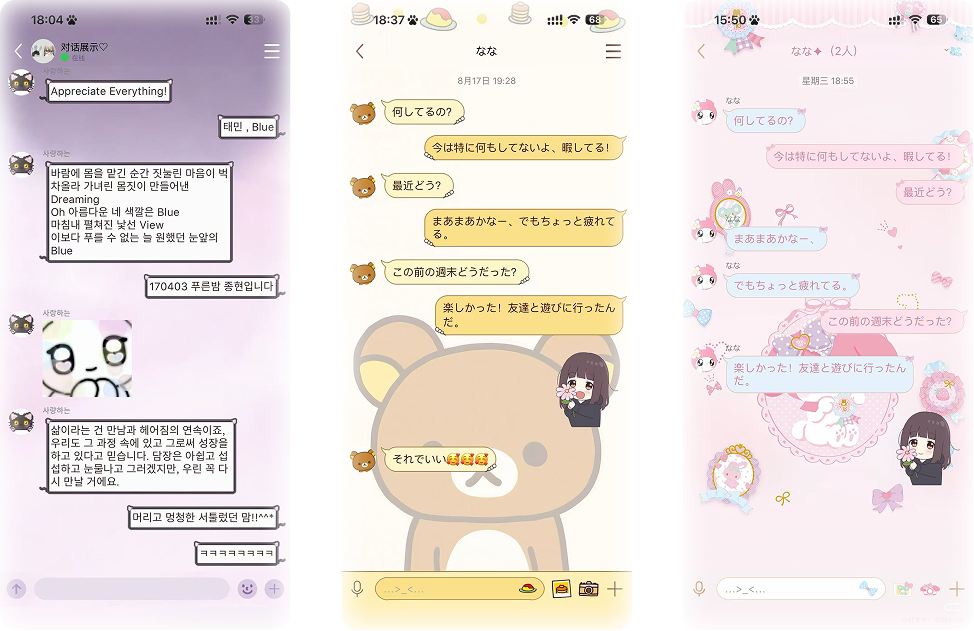
On Rednote, I found a flood
of healing, aqua, and gothic-cute themes.
They blended Chiikawa, Sanrio, and other adorable IPs,
creating a soft, dreamlike, fuwafuwa world
that instantly caught both my eyes and my heart.
Perhaps it was professional instinct,
but I think back to my childhood fascination
with skinning Windows XP,
hacking Nintendo DS and Wii themes—
silent beginnings of what would later make me a product designer.
That moment cracked open the gate of memory:
the child who once longed
to define their own digital world
had returned.
But what truly startled me
was the subject behind this technical landscape.
Almost all the sellers—and most of the users—
were young women.
In public imagination, such technically hard acts
and such a soft-coded demographic rarely overlap.
It was precisely this dissonance
that drew me in,
and I began several days
of immersive observation.
Through Rednote,
I contacted a girl and paid ten yuan
for an installation package of Customized V.
Yet that was only a ticket—
the expedition had just begun.
Then came the solitary passage through a sacred digital forest:
to secure my device a passport
(an enterprise developer certificate),
to migrate my chat logs without losing a trace,
until finally this altered, reborn WeChat
could take root in my own digital territory.
J’s story
These meticulous, lonely, and self-aware gestures
felt like a coronation of digital sovereignty—
a small, private ceremony
to reclaim control over my own interface.
Sadness rose up in me,
and before I could stop myself I typed:
“Your posts feel so painful.I wish I could give you a hug.”
She was surprised—
I hadn’t messaged her to buy anything—
but almost immediately she replied with kindness.
She shared the entire plugin file with me for free,
and even sent a screen-recorded tutorial,
showing me step by step
how to build my own customized V.
My first real lesson
came from her.
Later I said,
“I’m glad we met, even if it was because of
Customized V.”
She replied,
“It’s okay! You can message me anytime. Next time we can just chat.”
I don’t know why,
but I suddenly started crying.
It was so gentle,
and I won’t forget it.
We all live inside a system that isn’t ours,
trading brief moments of tenderness for a little bit of freedom.
Custom Themes
Installing the customized V
was only the beginning of beautifying my phone.
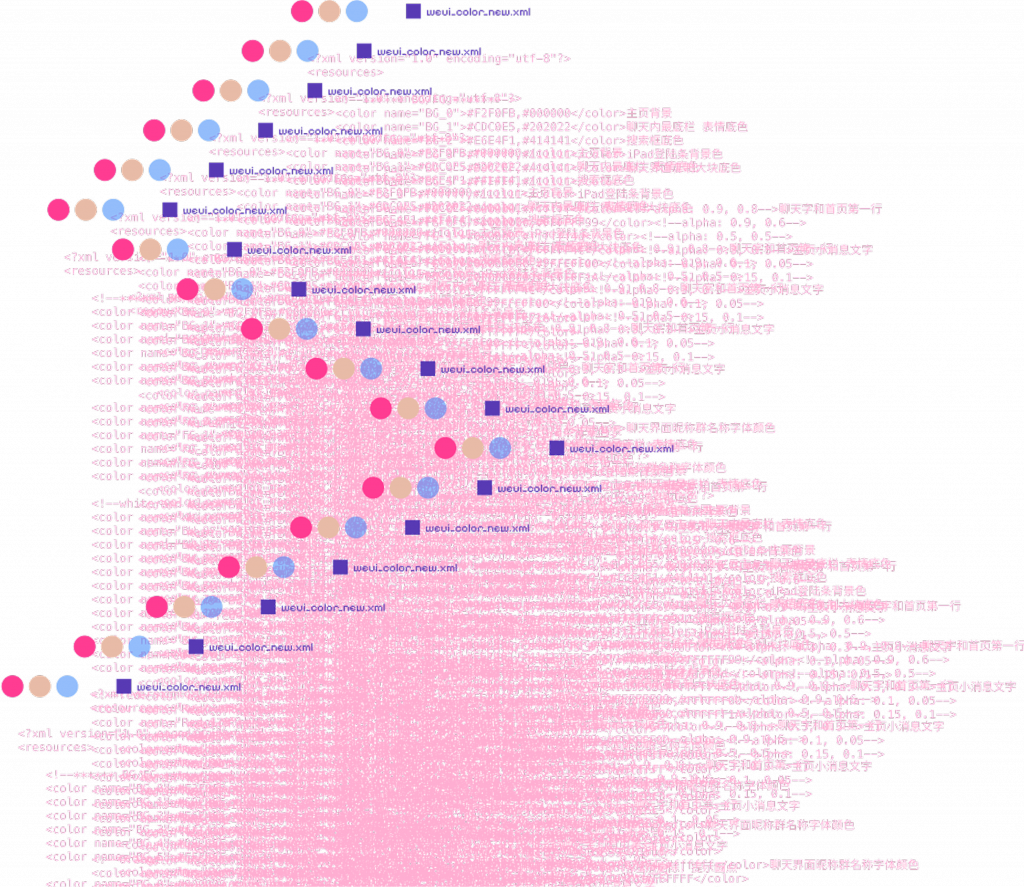
Opening this rewritten version of WeChat,
I discovered a special menu for managing plugins.
Many theme plugins were already pre-installed—
yet curiously, none of them contained
a built-in marketplace,
or even a link to purchase new ones.
After some trial and error,
I realized that the entire ecosystem operated independently.
To use a theme,
one must visit external platforms—
Weidian, Rednote, or Taobao—
to buy an authorization code,
then redeem it on a designated website
before the plugin could download the file successfully.
To be fair,
the most striking aspect of these themes
was often the background wallpaper itself.
Unfortunately, the UI icons and color palettes
rarely showed systematic design consideration.
They often produced a curious blend
of “delicate” and “tacky”—
a nostalgic kind of clumsiness.
As a designer by training,
I found this both fascinating and frustrating.
The lack of coherence sparked a quiet desire in me—
to make my own theme pack.
But I knew nothing
about the file structure behind WeChat’s themes,
nor did I have the tools to build one.
Even more troubling,
the theme packages purchased and redeemed from shops
were all encrypted containers.
With my current level of technical skill,
I couldn’t open or modify them.
That inability to alter
became yet another form of unfreedom—
a quiet reminder
that even the most personal interface
remains someone else’s domain.
Y’s Story
Soon after, I met another girl—Y—
who also sold WeChat theme packs.
Her works drew inspiration from LINE and Kakao’s official skins;
they felt more balanced, more polished—
easier on the eyes.
Unlike other sellers,
Y handled her business in a more direct way.
She simply sells on WeChat:
delivery was simply a cloud drive link.
What I downloaded was a base package—
a DIY kit of unencrypted materials.
Inside were full sets of assets and configuration files,
even color parameters one could modify manually.
For the first time,
I could glimpse the inner structure
of a WeChat theme package.
My conversations with Y
untangled many of my earlier questions.
These young female creators
did not possess deep technical control—
they weren’t the ones cracking clients or coding plugins.
Y admitted that the design tool she used
had been purchased at a high price years ago;
its developer had long disappeared,
the source lost in time.
She mentioned that the customized V she bought last year
cost nearly a hundred yuan—
the benefit being a one-click web installation.
When I casually told her
that my developer certificate had cost only twelve yuan
(though I had to sign the app manually),
she was astonished.
Later, out of technical sympathy,
I helped her figure out
how to switch themes with a single click
without renaming any folders.
When I expressed frustration
at the rough, inconsistent quality of existing themes,
and my desire to make my own —
it wasn’t just about fixing bad design.
I wanted to see if I could build
a digital space that felt entirely mine—
something no one else had designed,
no one else could revoke.
Y revealed to me a deeper layer of this small economy—
the authorization system.
To list a theme in the mainstream stores,
a creator must first pay a steep authorization fee
to obtain the right to encrypt and package their work.
Each sale requires sharing revenue with multiple parties,
making it nearly impossible to break even—
a heavy gamble for young creators with modest means.
Worse still,
the encryption-based redemption model
left creators with almost no control.
Developers could remove a theme at any time.
It was, in essence,
the same trap that independent developers face
on Apple’s App Store—
the owners of technology using their walls to quietly lock the paths of creativity.
What surprised me most
was that even within this tiny gray ecosystem,
there were already middlemen of middlemen—
reselling licenses,
siphoning profit from the layers below.
At the very top,
always unseen,
stood the mysterious team
who built the plugins themselves.
Later, I bought Y’s Chiikawa Flying Squirrel theme—
a soft violet version—
and proudly posted a screenshot on Rednote.
Soon a comment appeared,
accusing the author of “stealing files,”
urging others not to buy.
I knew how every subculture
breeds its own small factions and gossip,
so I let it pass.
Not long after,
Y saw my post and left a comment:
all her themes were indeed imitations of LINE,
and the so-called “hater”
was a former buyer
who had re-shared her files and been caught.
Now she was taking revenge.
Y confessed privately:
this was the risk of selling loose packages.
If she had paid for encryption,
such problems would disappear.
Harahara Tokei
In October, during China’s National Day holiday,
Tencent launched a new campaign against scams and third-party plugins.
The warning spread quickly across Rednote.
Many users of customized V clients began receiving official notices from the WeChat team:
some accounts lost access to group chats or friend requests;
others were permanently banned.

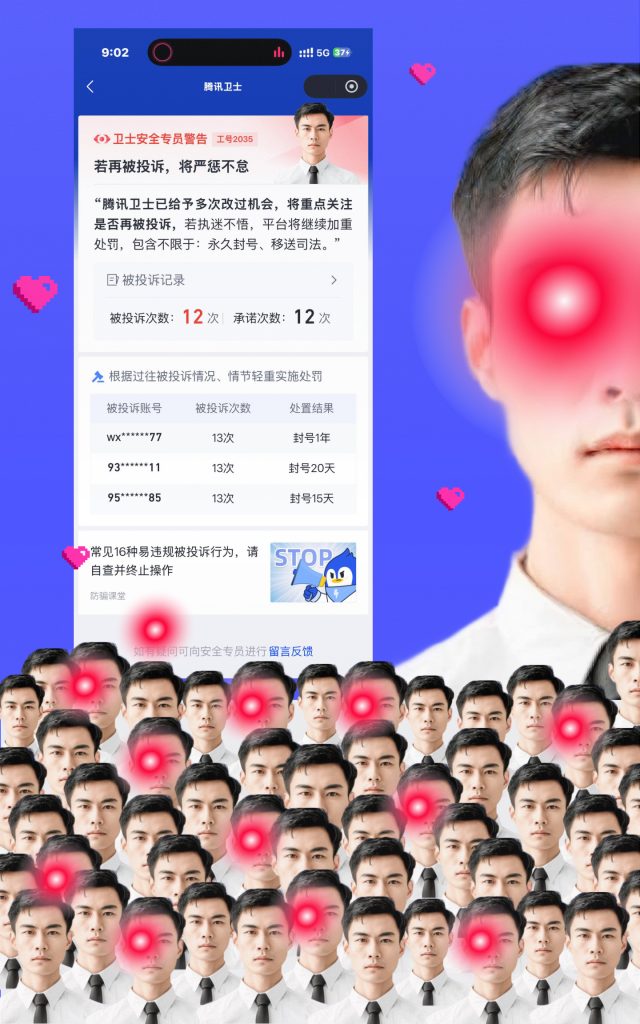
According to reports from Telegram groups and users like Y,
most bans occurred when someone performed “sensitive actions”
—such as adding new contacts—while the customized client was active.
So far, no method has proven able to completely evade detection.
During this time I learned a new term: “little eye.”
Inside the Tencent Security mini-program,
a red eye icon appearing over one’s avatar
signals an imminent warning—
a sign that one’s account is about to be restricted.
And yet, under such pressure,
many continued to wait and watch,
discussing when it might again be safe
to reinstall their customized V.
Some had received warnings five times or more,
but their enthusiasm never faded.
There was a sense of dependency—
once you’ve used it,
there’s no going back.
Personally, I’ve never liked WeChat.
If I had the choice, I wouldn’t use it at all.
Perhaps that’s why I was willing to take the risk,
to try these plugins myself.
After tuning its colors and interactions
to match my own sense of beauty,
I found myself—unexpectedly—liking it.
Even, perhaps, a little addicted.
But I also understood
what WeChat means for most ordinary users:
identity verification,
bank access,
family ties,
work connections,
and countless daily necessities.
To lose an account
is to have one’s life abruptly severed
at every layer.
And still,
some choose to take the risk.
I began to understand the quiet philosophy behind it:
The future doesn’t matter so much.
They just want to live a little more truthfully,
to feel a bit more control over the life in front of them.
The Harahara Clock does not measure time
in minutes or hours.
It measures anxiety as existence.
This trembling, this pulse,
reveals the being’s awareness of being-in-the-world.
Every heartbeat
is a silent confirmation
of one’s own existence.
The Stealth of Pain
WeChat’s account suspension system
resembles a panoptic prison of the digital age.
An individual need not be watched continuously—
the mere possibility of being seen
is enough to complete self-discipline.
And yet, the girls on Rednote
perform a reverse visibility within this regime of surveillance.
Through ita-style cuteness—
a dense layering of plush charms, pink ribbons, and glitter—
they cloak themselves
in carefully orchestrated visual fog.
This is at once an accidental escape
and a conscious activation
of their own Harahara Tokei.
Once visibility is enforced,
invisibility becomes a way to exist.
Thus, the attachment of visual themes
and the encryption of the ecosystem
together weave a new kind of digital invisibility cloak.
Those fluffy, pastel elements
are no longer mere decorations—
they condense into a functional membrane of protection.
Not a shield,
but a soft mist,
through which individuals
can momentarily breathe and move freely
beneath the system’s unblinking gaze.